When to replace your water heater vs repair
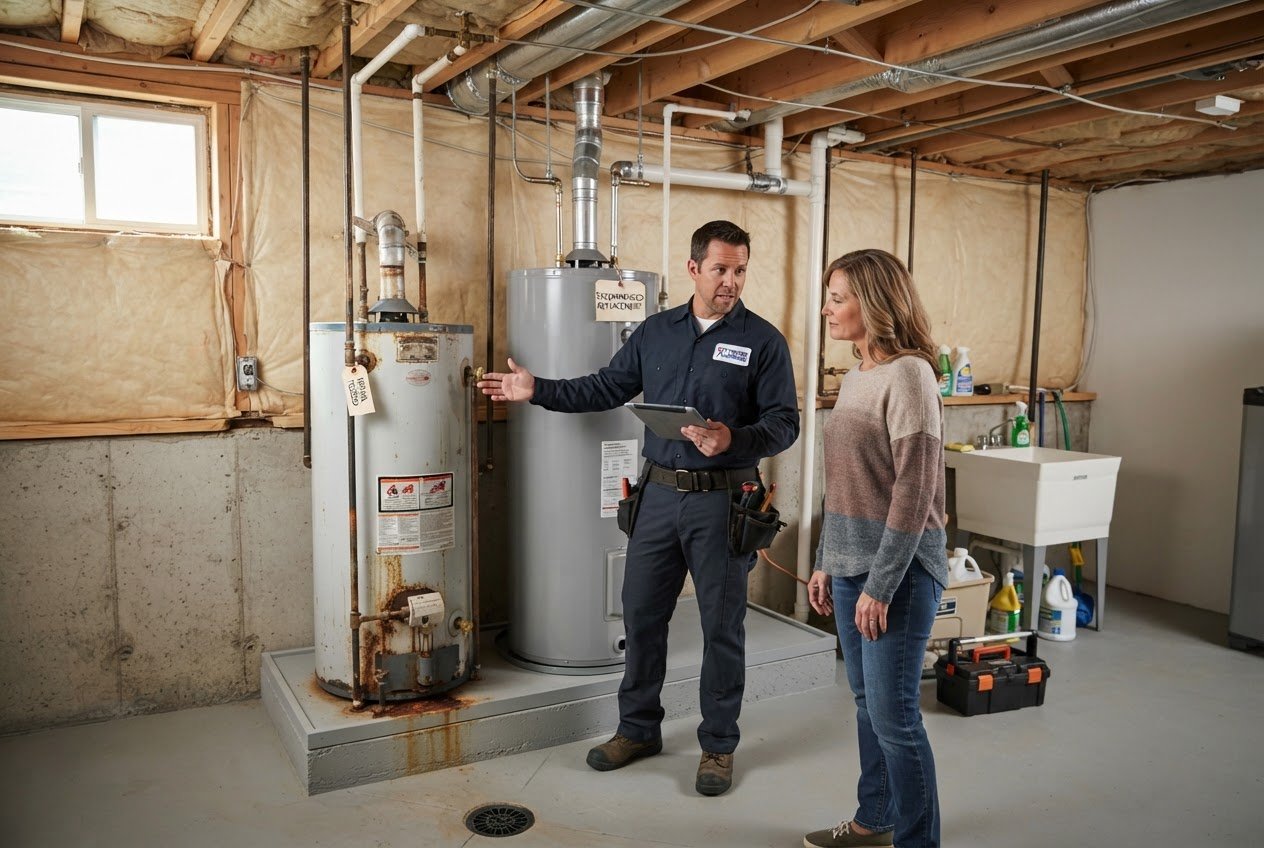
Repair your water heater if it's fairly young (under about 8 years) and the problem is a single worn part, like a thermostat or heating element. Replace it if the tank itself is leaking, it's past 10 to 12 years old, or the repair bill is getting close to half the cost of a new unit. That's the short version. Here's how to tell which side of the line yours falls on.
When repairing your water heater makes sense
Repair is the right call when the tank is sound and something small has quit. Tanks are built to outlast their parts, so a lot of problems are cheap to fix on a heater that's otherwise healthy. Common ones:
- No hot water at all on an electric heater. Often a failed heating element or thermostat, or a tripped high-limit reset button.
- Lukewarm water. One of two elements may be dead, or the thermostat setting has drifted.
- Pilot light won't stay lit on a gas heater. Usually a worn thermocouple (a small safety sensor that watches the flame).
- Water dripping from the relief valve or a pipe fitting. The valve or the connection can be replaced without touching the tank.
- Popping or rumbling noises on a younger heater. That's sediment (mineral buildup) on the bottom of the tank. Flushing the tank can clear it up if it hasn't gone too far.
If your heater is under about 8 years old and the issue is one of these, repair almost always wins. You're paying for a part and some labor, not for a whole new appliance.
Signs it's time to replace instead
Some problems can't be fixed, and others aren't worth fixing. Replace the heater when you see any of these:
- Water pooling under the tank from the tank body. Over time the steel inside corrodes through. Once the tank itself is leaking, there's no patch. It's done.
- Rusty or brownish hot water (while the cold water runs clear). That usually means the inside of the tank is rusting.
- Age of 10 to 12 years or more. That's about the typical life of a tank-style heater. Past that, you're borrowing time.
- Repeated repairs. A second or third service call in a short stretch tells you other parts are wearing out too.
- Constant running out of hot water. If your household has grown and the tank is simply too small, no repair will fix that.
- Heavy sediment and loud banging on an older heater. It heats less efficiently and the tank bottom is stressed.
To find your heater's age, check the label on the side of the tank for the serial number. On many brands, the first letter stands for the month (A is January, B is February, and so on) and the next two digits are the year. A label reading "F14" would mean June 2014. If you can't decode it, give us the brand and the number and we'll read it for you.
The rule for deciding when it's borderline
Plenty of heaters land in the gray zone: 7 to 10 years old, one problem, no obvious leak. Use these two checks:
- Compare the repair to the replacement. If the repair costs about half or more of what a new heater would cost installed, replace it. You'd be putting serious money into a unit with limited life left.
- Weigh the repair against the age. Under 8 years: repair unless the tank is leaking. Between 8 and 10 years: repair only if it's an inexpensive part, like a thermostat or valve. Over 10 years: replace if the fix is anything beyond minor.
One more thing to factor in: a heater that fails on its own schedule usually fails at a bad time, often with water on the floor. Replacing an old tank before it gives out lets you pick the day, choose the size and type that suits your household, and avoid cleanup. If your heater is well past 10 years and working fine, you don't have to replace it today, but it's smart to start planning.
What to do if it's leaking right now
If water is coming out of the tank, don't wait to see what happens.
- Turn off the power (breaker for electric) or set the gas valve to off or pilot.
- Close the cold water supply valve on the pipe feeding the top of the heater.
- Mop up and move anything valuable out of the way.
- Check whether the water is coming from a fitting or valve, which is repairable, or from the tank bottom or seams, which means replacement.
If you smell gas, leave the house and call your gas utility first. Don't try to relight anything.
Not sure which way to go?
If you've read this far and your heater still sits in the gray zone, that's normal, and it's a quick thing to sort out in person. Get in touch with Joe's plumbing, tell us the age, the type (gas or electric) and what it's doing, and we'll give you a straight answer on whether a repair is worth it or whether you'd be better off putting that money toward a new heater.