The five minute check that stops a frozen pipe
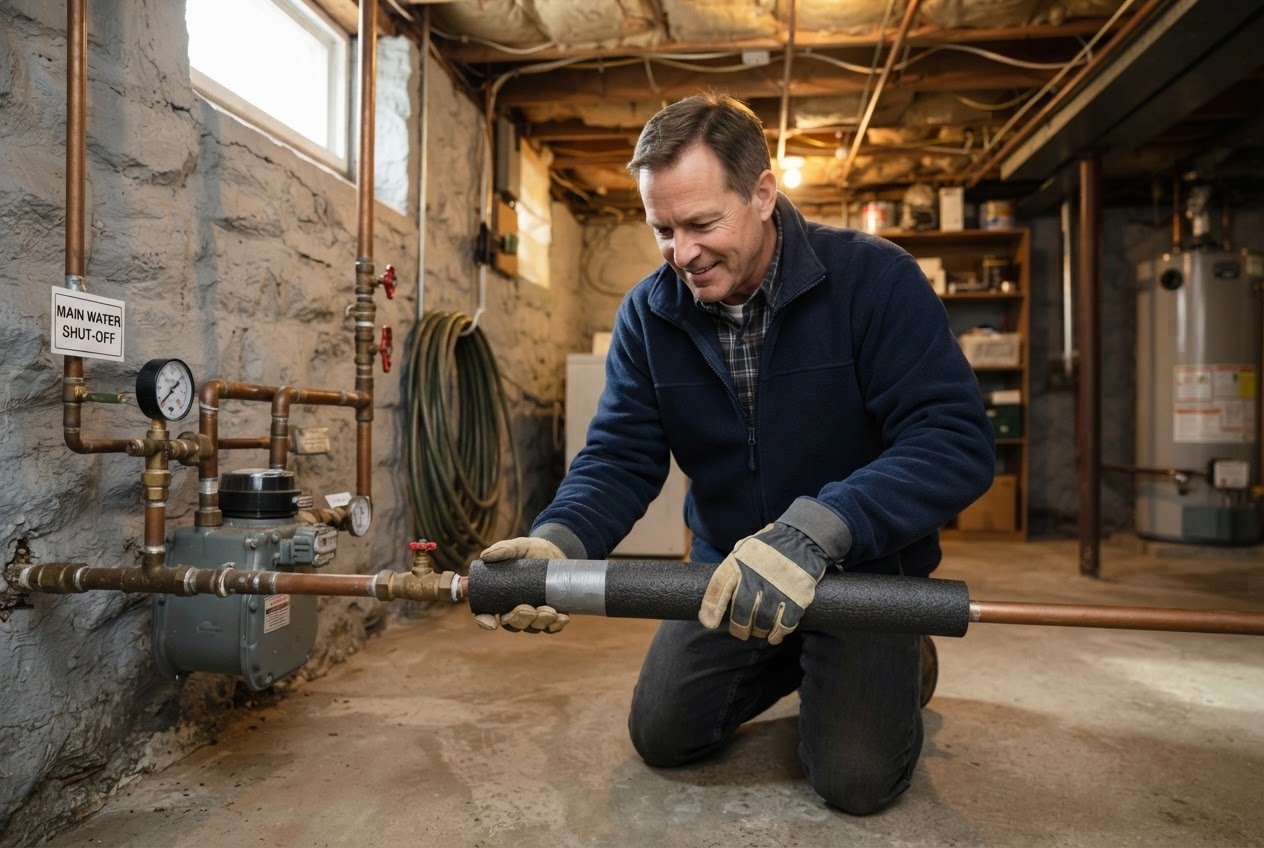
The check that stops most frozen pipes takes about five minutes: disconnect and drain your outdoor faucets, look at every pipe that runs through an unheated space, open the cabinets on outside walls, and make sure you can find and turn your main water shutoff. Do it before the first hard freeze and you've covered the spots where pipes usually give out.
Here's the walkthrough, then what to do on the coldest night, and what to do if you're already too late.
The five minute walkthrough
Grab a flashlight and go through the house in this order. Each step is quick.
- Outdoor faucets (1 minute). Unscrew every garden hose, including splitters and timers. A hose left attached traps water in the faucet, and that water freezes and pushes back into the pipe inside your wall. If you have a shutoff valve for the outdoor line (usually in the basement or crawlspace), close it, then open the outside faucet to let the line drain.
- Unheated spaces (2 minutes). Look in the basement, crawlspace, garage, attic and any utility closet that doesn't get heat. Find the pipes you can see. Any bare pipe running along an exterior wall or near a vent, window or door is a candidate. Wrap them in foam pipe sleeves, which are cheap at any hardware store and slip on over the pipe. Use the sleeve size printed for your pipe diameter.
- Drafts (1 minute). Look for cold air moving in near pipes. Gaps where pipes enter the house, open crawlspace vents, a garage door that doesn't seal and cracks around a basement window can all turn a pipe that's usually fine into one that freezes. Plug small gaps with caulk or spray foam, and close any vents you can.
- Outside-wall cabinets (30 seconds). Check under kitchen and bathroom sinks that sit against an exterior wall. Those pipes sit between a cold wall and a closed cabinet door, so they get the worst of it.
- Main shutoff (30 seconds). Find where water enters the house and locate the main valve. Turn it a quarter turn or full turn and make sure it moves. If it's stuck or leaks, you want to know now, not when water is spraying.
That's it. If you spot something you can't fix yourself, like a pipe buried in a wall with no access, make a note and get it looked at before the next cold stretch.
What to do on the coldest night
Pipes don't freeze the moment the air hits 32°F. It usually takes a long stretch of hard cold, or a deep dip, with wind making it worse. When the forecast shows temperatures dropping well below freezing, or staying there for a day or more, add these steps:
- Keep the heat on. Don't turn it way down overnight or while you're away. A setting of 55°F or higher keeps the house warm enough to protect most plumbing.
- Open cabinet doors. Under sinks on outside walls, leave the doors open so warm room air can reach the pipes.
- Let a faucet drip. Pick a faucet served by a pipe on an exterior wall and let it run at a slow, steady trickle. Moving water is much harder to freeze, and a drip also relieves pressure that builds between ice and the faucet.
- Open interior doors. If a bathroom or laundry room sits on a cold side of the house, keep its door open so heat spreads through.
Going away in winter? Keep the heat on, and have someone check the house every day or so. If you'd rather shut the water off, close the main valve and open the faucets to drain the lines. That's a bigger job, so ask a plumber if you're unsure.
What to do if a pipe freezes or bursts
The first sign of a frozen pipe is usually a faucet that gives you a trickle or nothing at all. Don't wait it out. A frozen pipe can split as the ice expands, and the real flooding often starts when the ice melts.
If water isn't flowing, here's what to do:
- Open the affected faucet so water has somewhere to go as the ice melts.
- Warm the pipe slowly. A hair dryer on low, a heating pad or warm towels work. Start near the faucet and work back toward the frozen spot.
- Never use an open flame, a torch or a space heater pointed at the pipe. That's a fire risk, and overheating can damage the pipe.
- Check the pipe for cracks or drips once it thaws, and look at nearby walls and ceilings for dampness.
If a pipe has burst, or you see water where it shouldn't be, go straight to your main shutoff and turn it off. Then open a faucet at the lowest point in the house to drain what's left, and call a plumber. If the water is near outlets or the electrical panel, stay clear and shut off power only if you can reach the breaker safely and dry.
Also, if you can't find the frozen section, or it's inside a wall or under a slab, stop and call for help. Cutting into walls on a guess usually makes things worse.
Next step
Set a reminder for the first week of cold weather and run through the five steps above. If you find a pipe that's exposed, a valve that won't turn, or you're dealing with a freeze or leak right now, call Joe's Plumbing and tell us what you're seeing. The sooner you catch it, the smaller the repair tends to be.