How much does a new septic system cost in Georgia
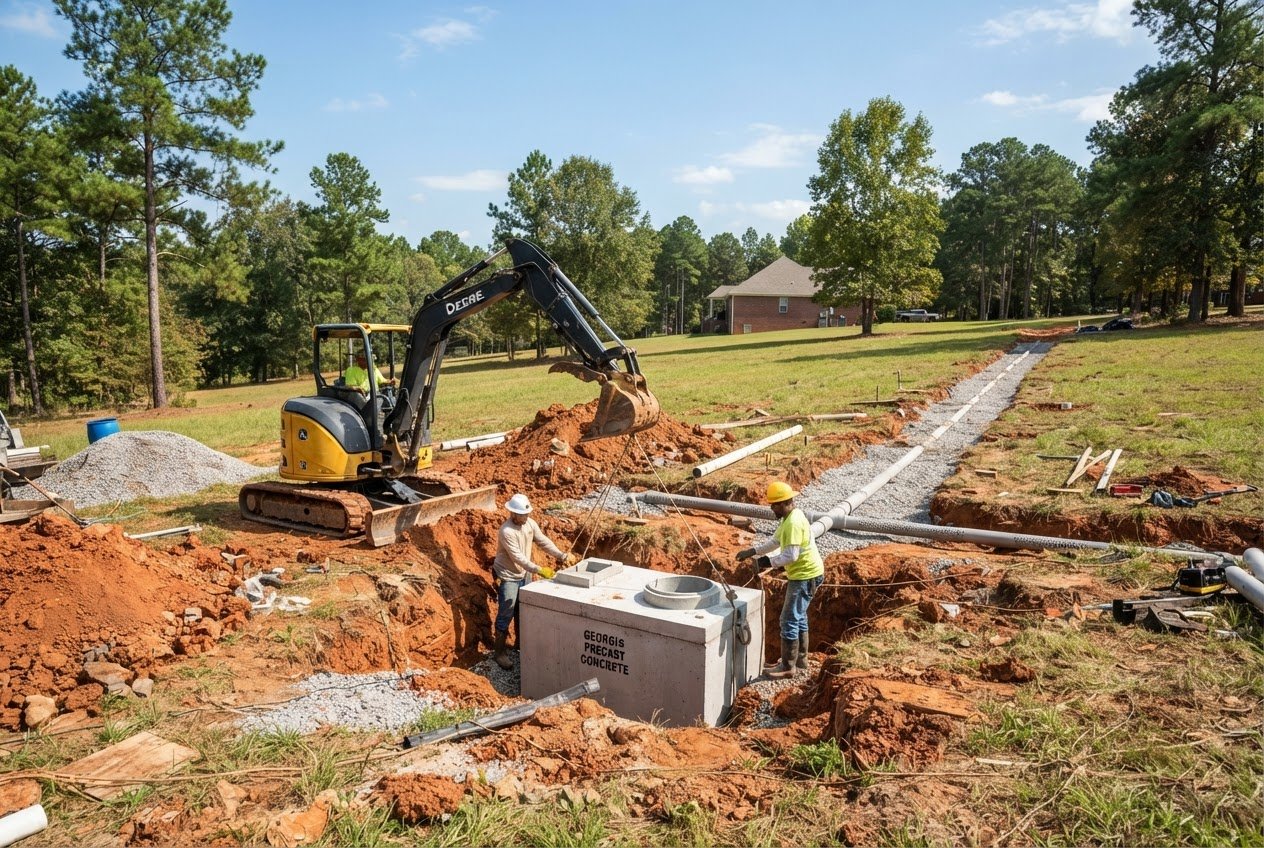
A new septic system in Georgia commonly costs somewhere around $5,000 to $15,000 for a standard gravity-fed setup, and $15,000 to $30,000 or more when the lot needs an engineered or alternative system. Those are ballpark figures, not a quote. Your final number comes down to your soil, your house size, and what the county requires on your lot.
Here's what moves the price, how to figure out which end you're likely on, and what to do before you sign anything.
What makes up the cost of a new septic system?
Most of the bill falls into a few buckets:
- Site and soil evaluation. Before anything gets approved, the soil has to be tested to see how well it drains. This is usually a modest line item compared to the rest, but it decides which type of system you can even install.
- Permit fees. In Georgia, septic permits go through your county health department (environmental health). Fees vary by county, so call yours for the current amount.
- The tank. Tank size is based on the number of bedrooms in the house, not how many people live there. A bigger house needs a bigger tank.
- The drainfield. This is the network of trenches where the liquid from the tank soaks into the ground. It's usually the biggest part of the job, and the amount of ground it needs depends on how well your soil drains.
- Excavation and labor. Digging, hauling, trenching, and backfilling. Rocky ground, steep slopes, and lots of trees all add time.
- Inspection and finishing. The county has to inspect the system before it's covered up, and then there's grading and cleanup.
Why do prices swing so much across Georgia?
Mostly because the ground does. Georgia has very different soil from one end of the state to the other.
In the Piedmont region (think north of Macon, including much of the Atlanta area), you'll often find heavy red clay. Clay drains slowly, so you may need more drainfield, or a different design altogether. In the coastal plain and near the coast, soil can be sandy, which drains fast, but a high water table can be the problem. If groundwater sits too close to the surface, the system can't treat wastewater properly, and you may need a raised or engineered system. In north Georgia, slopes and rock can make the digging harder and more expensive.
The takeaway: two neighbors can get very different prices for similar houses, simply because their soil tests came back differently.
Conventional versus engineered systems: which do you need?
Here's the rule of thumb for deciding.
- If your soil drains well, the water table is deep, and you have enough flat, open space, you're likely looking at a conventional gravity system. That's the lower end of the range.
- If the soil is slow or the lot is small, sloped, or has a high water table, expect something like a pump-assisted system, a mound system (a raised bed of sand and fill), or an aerobic treatment unit. These cost noticeably more, and they usually come with ongoing needs like electricity, an alarm, and maintenance.
You won't pick this yourself. The soil evaluation and the county's rules decide it. But knowing the dividing line helps you read a quote and understand why one is double another.
What else could add to the bill?
A few extras catch people off guard:
- Clearing trees or brush from the drainfield area.
- Hauling in fill dirt or sand if your lot needs it.
- Long distances between the house and the tank location, which means more pipe and more trenching.
- Electrical work for pumps or aerobic units.
- Removing or abandoning an old system if you're replacing one.
- Landscaping repair after the heavy equipment leaves.
Ask every contractor to list what's included and what isn't. If a quote is a single number with no detail, that's worth a follow-up question.
How to get an accurate number
Here's the order that works best:
- Call your county health department and ask about the septic permit process and soil evaluation for your lot.
- Get the soil evaluation done. Until you have it, any price is a guess.
- Get at least two or three written quotes from licensed septic installers, all based on the same approved design.
- Compare line by line. Tank size, drainfield size, permit handling, inspection, and cleanup should all be spelled out.
- Ask about timing. Permits, inspections, and weather can stretch the schedule, so plan on it taking longer than the digging itself.
One last tip: don't pick the cheapest quote just because it's cheapest. A drainfield that's undersized to save money is the kind of mistake that shows up a few years later as soggy ground and a big repair bill.
Your next step
Start with the soil evaluation and your county's permit requirements. Once you know what type of system your lot allows, quotes become easy to compare, and you'll know what a fair price looks like for your property.