What not to flush down your toilet with a septic tank
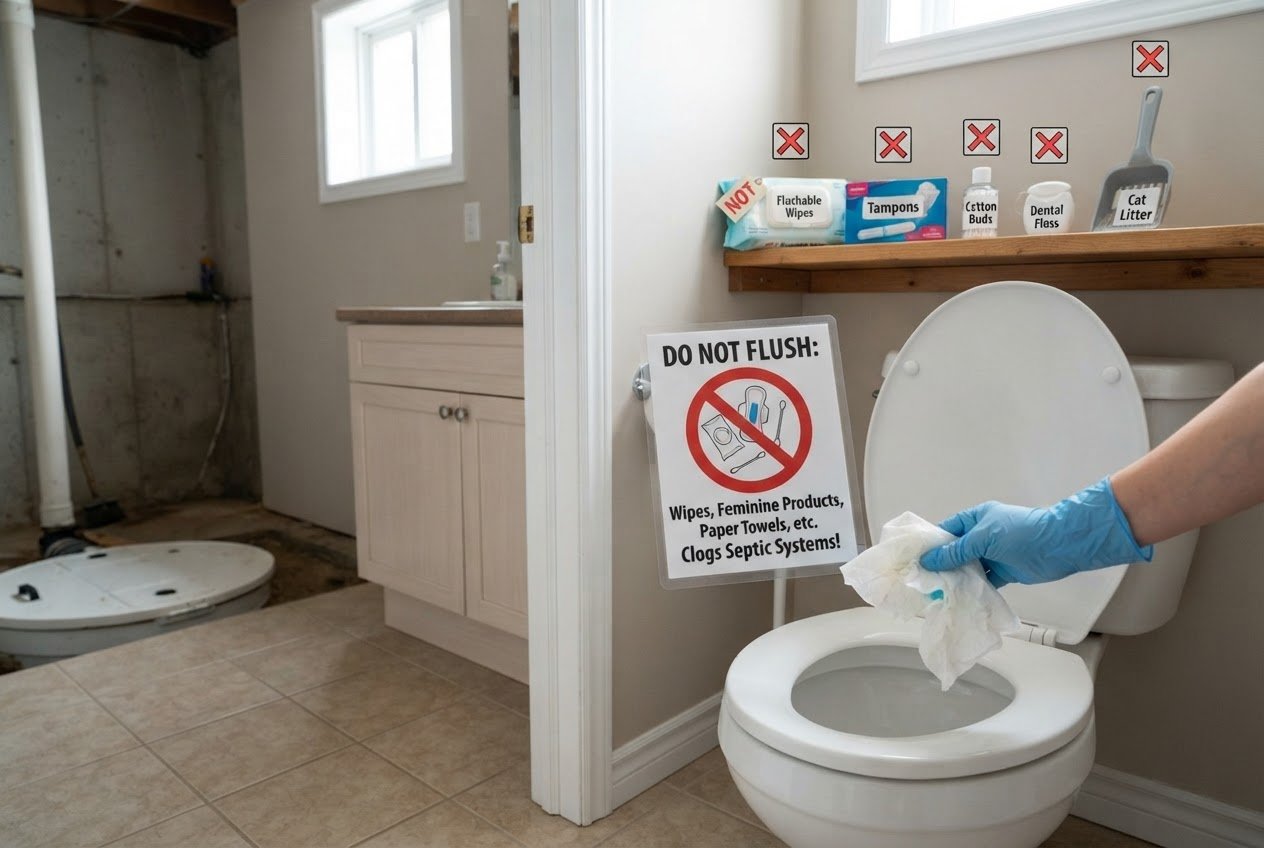
If your home runs on a septic tank, the rule is simple: flush only human waste and toilet paper. That's it. Wipes (even the ones labeled flushable), paper towels, feminine products, cotton swabs, floss, medications, grease, and harsh chemicals all belong somewhere else. Here's why each group causes trouble, and what to do if something slips through.
Which items clog or fill up a septic tank?
A septic tank isn't a magic disappearing act. Waste sits in the tank, bacteria break down the solids, and the liquid drains out to the drain field. Anything that doesn't break down just piles up, and it can end up blocking the pipes that carry water out of the tank.
Keep these out of the toilet:
- Wipes of any kind. This includes baby wipes, cleaning wipes, and the ones sold as flushable. They don't fall apart the way toilet paper does. Even when they make it through your house plumbing, they collect in the tank and can wrap around pumps or clog the outlet.
- Paper towels, tissues, and napkins. They're made to stay strong when wet, which is exactly the opposite of what you want here.
- Feminine products. Tampons, pads, and applicators don't break down, and tampons swell up with water.
- Cotton swabs, cotton balls, and dental floss. They're small, so they feel harmless. Floss in particular tangles with other debris and builds up into clumps.
- Diapers, condoms, and hair. None of these break down in any useful time frame.
- Cat litter. Even the kinds marked flushable clump and settle into a hard layer in the tank.
The rule of thumb: if it wasn't eaten or digested first, and it isn't toilet paper, it doesn't go in the toilet.
What flushed items harm the bacteria in the tank?
The bacteria in your tank do the real work, and some things you'd never think of as clogs can still hurt them. When the bacteria struggle, solids break down more slowly, the tank fills faster, and you can end up with odors and slow drains.
Watch for these:
- Medications. Antibiotics and other drugs can disrupt the bacteria, and they're not great to send out into the soil either. Take leftovers back to a pharmacy take-back program or follow your local disposal guidelines.
- Drain cleaners and heavy bleach use. A normal bit of bleach in laundry is generally fine. Pouring in cups of it, or dumping in strong chemical drain openers, can knock back the bacteria in the tank.
- Paint, solvents, antifreeze, and pesticides. These can poison the tank's bacteria and contaminate the drain field. Take them to a household hazardous waste drop-off.
- Grease, oil, and fat. They cool and harden, floating in a thick scum layer at the top of the tank. Wipe pans with a paper towel and put it in the trash.
- Coffee grounds and food scraps. They don't belong in the toilet or the sink. They add solids the tank doesn't need to handle.
If you use the toilet bowl cleaner or cleaning products that come with a typical household, you're usually fine. It's the heavy, repeated doses of strong chemicals that cause trouble.
What about septic-safe toilet paper?
Toilet paper is the one paper product made to break down in water, but some brands do it better than others. Thick, quilted, or extra-plush paper often takes longer to break apart. A quick test: drop a few squares in a jar of water, shake it, and see if it falls apart in a few seconds. If it stays in big pieces, it's not the best choice for your tank.
Also, use it sensibly. A huge wad of paper is more likely to clog the line between the toilet and the tank, even with good paper.
What if you've already flushed something you shouldn't have?
Don't panic. A single wipe or cotton swab usually isn't a disaster, but it's worth knowing the warning signs that something is building up:
- Toilets and drains that gurgle or drain slowly
- Sewage smells inside the house or around the tank and drain field
- Soggy ground or unusually green, lush grass over the drain field
- Water backing up into tubs, showers, or floor drains
If you see any of these, stop using water as much as you can (skip the laundry and the dishwasher) and get someone to take a look. Running more water through a stressed system can push the problem further along, including into the drain field, which is the most expensive part to repair.
If a toilet is clogged by something solid, don't reach for chemical drain cleaner. A plunger is the safer first move for your tank. If that doesn't work, it's time to call a plumber rather than escalate.
The simple habit that fixes most of it
Keep a small lidded trash can in the bathroom and tell everyone in the house, including guests, that it's for anything that isn't toilet paper. A short note on the wall or the tank lid works wonders for visitors who don't know you're on septic. A little reminder now is much cheaper than a backup later.
If you're not sure what's safe for your system, or you think something has already gone down that shouldn't have, give Joe's plumbing a call. We'd rather check early than have you deal with a backed-up tank on a holiday weekend.